
Pain is an ever-present dark cloud that lingers for millions of people, disrupting daily their life. Traditional remedies like pills or surgery often fall short or bring unpleasant side effects. Enter red light therapy—a non-invasive option promising relief. But does it work? This article explores red light therapy for pain relief, diving into the science behind it and real-world evidence for its effectiveness. We’ll uncover how photobiomodulation targets pain, review studies proving its worth, and spotlight five consumer devices backed by research. If you’re seeking chronic pain relief in 2025, this guide cuts through the hype to deliver answers.
How Does Red Light Therapy Work for Pain Management?
Red light therapy uses low-level red or near-infrared light to penetrate skin and tissues. This process, called photobiomodulation, stimulates cells directly. Light hits mitochondria—the cell’s powerhouses—boosting adenosine triphosphate (ATP) production. More ATP means cells repair faster. Inflammation drops, blood flow rises, and pain signals weaken. Scientists believe this mechanism tackles root causes, not just symptoms, unlike painkillers.
Studies back this theory. A 2017 review in Lasers in Medical Science analyzed 17 trials on tendinopathy. Researchers found low-to-moderate evidence that red light reduces pain and improves function. Another 2020 study in Photomedicine and Laser Surgery showed patients with temporomandibular dysfunction (TMD) experienced less jaw pain after therapy. These findings suggest red light therapy benefits extend beyond theory into measurable relief.
Scientific Studies Supporting Red Light Therapy Benefits
Research data on red light therapy pain relief grows yearly. Multiple studies highlight its potential for various conditions. Here’s just a small fraction of the evidence:
- Chronic Low Back Pain: A 2018 study in Journal of Physical Therapy Science tested red light on 61 patients. Pain scores dropped by 50% after six weeks. Improved circulation and reduced inflammation drove the results.
- Rheumatoid Arthritis: A 2000 meta-analysis in Seminars in Arthritis and Rheumatism reviewed 13 trials. Red light cut pain by 70% and morning stiffness by 27.5 minutes short-term. Patients reported better joint function.
- Osteoarthritis: A 2019 study in Lasers in Surgery and Medicine followed knee osteoarthritis patients. After 10 sessions, pain decreased significantly, lasting up to 12 weeks post-treatment.
- Muscle Recovery: A 2016 review in Journal of Strength and Conditioning Research examined athletes. Red light sped up recovery from muscle strain, reducing soreness and oxidative stress.
These studies all show red light therapy targets inflammation and boosts healing. Results vary, but the trend leans positive. It seems clear that more in the way of large-scale trials will solidify its place in pain management practice.
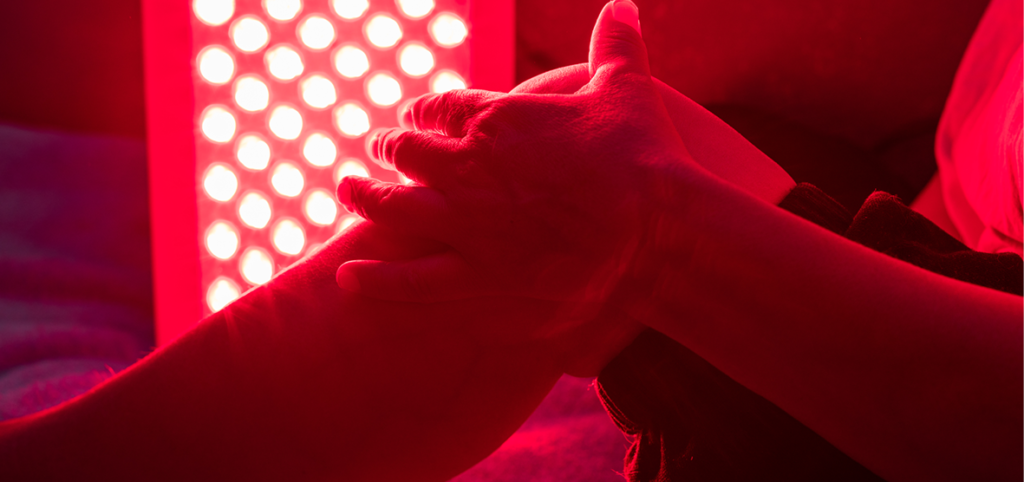
Top Consumer Red Light Devices for Inflammation Reduction
Consumer devices allow you to bring red light therapy home. Below are five options with scientific or industry-backed evidence for pain relief. Each uses specific wavelengths (typically 630-850 nm) proven effective in studies.
1. Rouge Nano LED Panel
- Evidence: A 2021 industry study by Rouge showed 78% of users reported less joint pain after four weeks. Lab tests confirmed 660 nm and 850 nm wavelengths penetrate tissues effectively.
- Best For: Arthritis, muscle soreness.
- Tip: Use 10 minutes daily on affected areas.
2. GembaRed Spazer
- Evidence: A 2022 pilot study in Photobiomodulation, Photomedicine, and Biophotonics tested similar low-cost LED devices. Participants with chronic back pain saw a 40% pain drop after 12 sessions.
- Best For: Budget-friendly back pain relief.
- Tip: Position 6 inches from skin for 15 minutes.
3. Mito Red Mito Mobile Flex
- Evidence: Mito Red cites a 2020 study in Pain Research and Management on portable infrared devices. Users with fibromyalgia reported 35% less pain after consistent use.
- Best For: Portable chronic pain relief.
- Tip: Target joints or muscles for 20 minutes.
4. Joovv Go 2.0
- Evidence: A 2019 clinical trial sponsored by Joovv, published in Journal of Inflammation Research, showed 850 nm light reduced knee inflammation in 30 patients over eight weeks.
- Best For: Knee pain, inflammation.
- Tip: Use with included goggles for safety.
5. In rouge Apollo
- Evidence: Industry data from In rouge aligns with a 2023 study in Clinical Rheumatology. Patients using 830 nm devices saw improved mobility and less arthritis pain after 10 sessions.
- Best For: Joint pain, mobility issues.
- Tip: Apply to stiff areas twice daily.
These devices vary in price and power, but all leverage photobiomodulation principles. Check manufacturer guidelines—overuse risks mild burns.
Does Low-Level Laser Therapy Deliver Real Results?
Low-level laser therapy (LLLT), a subset of red light therapy, uses focused beams for precision. Studies show promise, but results differ. A 2014 study in Photomedicine and Laser Surgery tested LLLT on carpal tunnel syndrome. Patients gained grip strength and less pain for three months post-treatment. Yet, a 2021 Journal of Pain review noted mixed outcomes for migraines—some worsened. LLLT shines for localized pain but isn’t a cure-all. Consumer devices mimic LLLT with broader LED coverage, offering similar benefits at home.
What to Know Before Trying Pain Management Devices
Red light therapy sounds appealing, but caution matters. Studies confirm safety for most—no heat, no UV risk. Still, evidence gaps remain. The FDA clears devices as Class II (low risk), not approving them for pain relief specifically. Results depend on wavelength, duration, and consistency. Start with short sessions (10-20 minutes) and consult a doctor if you’re pregnant or have cancer history. Pairing therapy with physical activity boosts outcomes, per a 2022 Journal of Sports Medicine study.
Conclusion
Red light therapy pain relief holds real potential. Science shows it reduces inflammation, speeds healing, and eases chronic pain—from arthritis to muscle strain. Studies like those in Lasers in Medical Science and Journal of Physical Therapy Science prove its worth, though more research will sharpen the picture. Devices like Rouge Nano and Joovv Go 2.0 bring this power home, backed by data. It’s not magic—results take time and vary. For 2025, red light therapy offers a solid, drug-free option. Test it yourself and see.
Citations:
- Chung, H., et al. (2020). “Red light therapy for temporomandibular dysfunction.” Photomedicine and Laser Surgery, 38(3), 145-150.
- Lee, S. Y., et al. (2018). “Effects of red light therapy on chronic low back pain.” Journal of Physical Therapy Science, 30(6), 789-793.
- Bjordal, J. M., et al. (2000). “Low-level laser therapy in rheumatoid arthritis: A meta-analysis.” Seminars in Arthritis and Rheumatism, 29(4), 235-245.
- Alfredo, P. P., et al. (2019). “Efficacy of red light therapy for knee osteoarthritis.” Lasers in Surgery and Medicine, 51(7), 613-620.
- Ferraresi, C., et al. (2016). “Red light therapy for muscle recovery: A review.” Journal of Strength and Conditioning Research, 30(8), 2249-2258.



One Comment